
Tracing Former Washington County Owners
Every Washington County ownership chain reads backward, starting at the newest recorded deed. Capture the same fields each time. Deed reference, date, parties, price, and legal description belong at every step. One tax card lists deed D-2002-26490 and sales-history entries dated January 14 and June 11, 2002, each carrying a different price and instrument. Those entries are clues, not proof. The tax card alone cannot establish the chain. Grantor and grantee names must come from the index or the deed image itself.
| Transfer Date | Grantor → Grantee | Deed Type | Book/Page or Instrument |
|---|---|---|---|
| 06/11/2002 | Read grantor → grantee from the recorded instrument | Confirm from deed index | CAMA shows deed D-2002-26490; verify reference |
| 01/14/2002 | Use the prior sales-history parties as a search lead | Confirm from deed index | Exact instrument not captured |
| Earlier conveyance | Search the prior grantor as grantee | Read image or deed book | Washington online start year not published |
| Fire-era record | Follow later deed recitals and court files | May be incomplete | Check Clerk, Library of Virginia, and HSWCV |
SRA and COVERS cover the online stretch. When the index stops, the Circuit Clerk can pull older deed books or microfilm. A recorded plat can clarify the lot. Probate and chancery explain a transfer that was not a simple sale. No cutoff year is published. So no date range can be assigned to Washington County's online index with confidence.
Walking the Washington County Chain Back
Start at the newest deed, where the current owner is grantee. That grantor is the next name to search. Carry the acreage, the lot or metes-and-bounds description, and the instrument reference at every step. If the details shift, stop and confirm the same parcel.
- Find the newest deed for the parcel and note the current grantee.
- Read the grantor and full legal description from that instrument.
- Search the grantor as grantee in the prior transfer and match the land.
- Record date, instrument type, book or document reference, and consideration if shown.
- When the index no longer reaches back, ask for a deed book or archival lead.
- Grantor
- The person or entity conveying the recorded interest.
- Grantee
- The person or entity receiving the interest.
- Chain of title
- The linked sequence of recorded transfers for one parcel.
- Legal description
- The lot, block, or boundary language that identifies land more precisely than a street address.
How Far Back Washington County Records Reach
Washington County publishes no start year for its online SRA index. So a stalled search proves nothing. It does not mark the beginning of land records. The Circuit Clerk keeps the local deed books. Records reach back to the county's 1776 formation, though the courthouse fire left surviving books and early minutes incomplete, and the Clerk can advise on the oldest volumes.
Archive limit. The online cutoff is not published. Ask the Washington County Clerk about older deed books, then use Library of Virginia and HSWCV holdings where a courthouse record is missing. Use former-owner records for lawful property history, never to track or harass a living person.
Washington County SRA and Clerk Access
Virginia SRA and COVERS can provide a free, index-only search where the local court enables it. Images work differently. A clerk-authorized subscription, a signed agreement, and applicable fees all come into play. No start year is published. The county's online index start year and exact image schedule are not published either, and a search result can point to an instrument that still needs a clerk request or a deed-book visit.
The Circuit Clerk works by counter, mail, and email. The Clerk's page separates the two. Recording runs through CSC and Simplefile, while title searches and records access run through SRA and OCRA. If the online index stops, give the Clerk the current deed reference, party names, and legal description, and ask which older book or microfilm run holds the next link.
The Virginia SRA guide explains the statewide access split. The Washington County Clerk page lists the request routes.
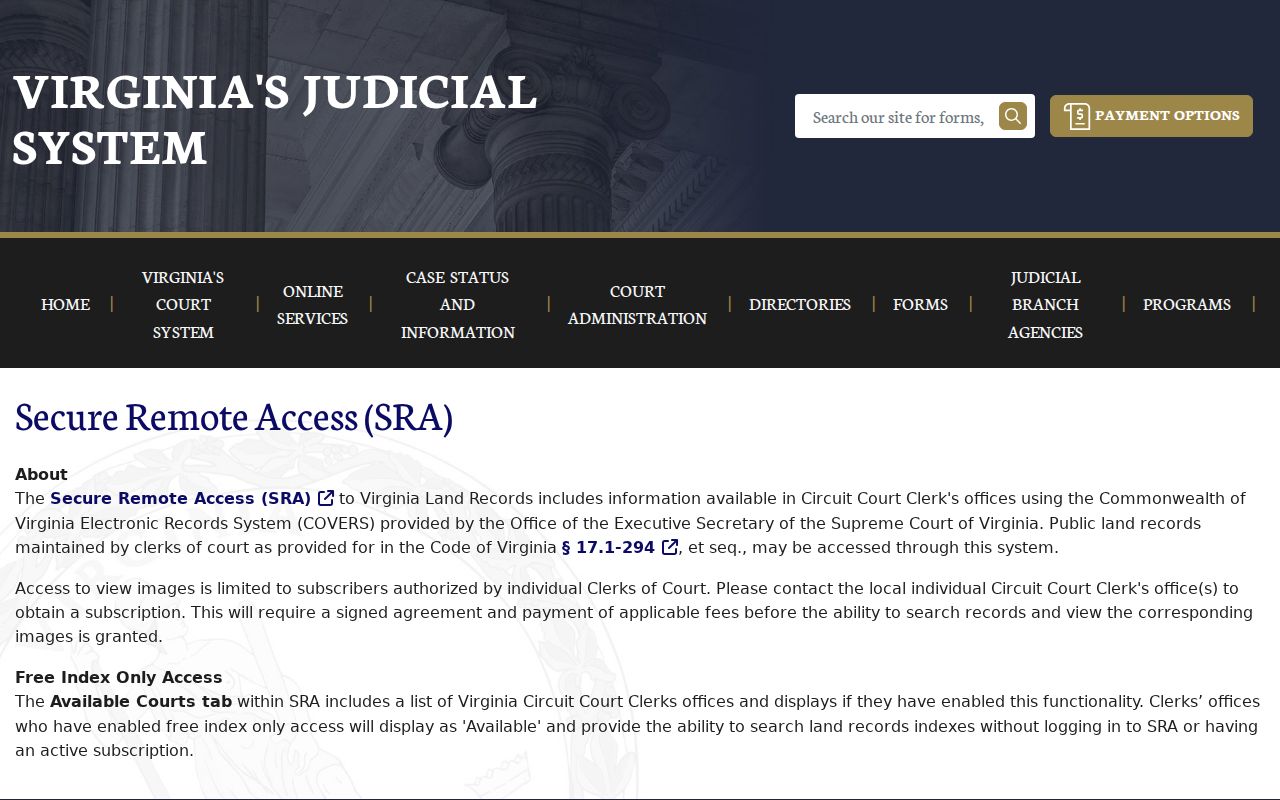
SRA routes the index; the Clerk handles the rest.
The Washington County 1864 Courthouse Fire
The December 1864 fire destroyed many of Washington County's early court records. Library of Virginia descriptions name minute books for 1787 to 1819 and 1821 to 1837, along with loose papers. The loss is deceptive. A chain can look finished when it is not. A later deed, tax record, chancery file, or family paper may still refer to the same land.
Work around missing books with recitals. Later instruments often recite older deeds and can restore a lost link. Keep every spelling variant of a family name. Compare acreage, adjoining owners, roads, and lots.
Never write "no prior owner." A silent index or damaged volume is not proof, so note the gap in the chain record and give each link its source and level of certainty.
Washington County Chancery Files
Chancery causes from Washington County dated 1849 through 1912 sit in the Library of Virginia's digitized index. These case files hold pleadings, depositions, exhibits, partitions, boundary descriptions, and estate disputes. That makes them a goldmine when a deed chain runs into a court event. A plain deed often stops where a fight began. Chancery picks the story back up.
Search by party names and locality first. Then read the whole file for any parcel wording. A cause may list heirs or adjoining landowners, which helps confirm who held the land. It still does not replace the deed. The final decree matters, so compare it with the Circuit Clerk's land records, and keep the case year separate from the recording year.
For older Washington County chains, treat the Library of Virginia Chancery Records Index as a reconstruction source worth its weight in gold.
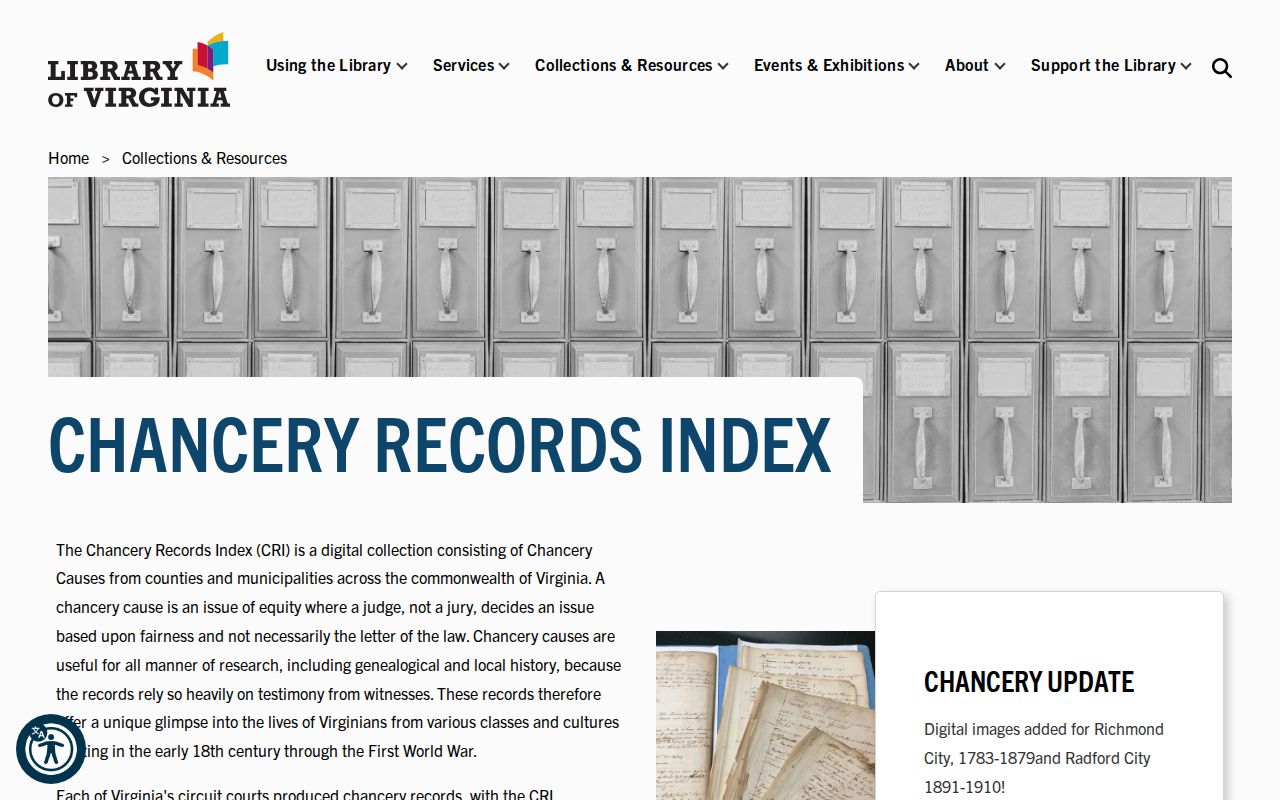
The archive page shows the cause index itself. Open the case file to judge how it connects to the parcel.
HSWCV Deed and Family Leads
The Historical Society of Washington County, Virginia holds a deep index for deed research. Its collection covers deed books and land transactions. It also holds legal documents, family histories, manuscripts, obituaries, and subject files. The tally is large: more than 1,260,000 entries, 7,000 books, and over 200,000 digitized images. An index hit does not always mean a full scan waits at the other end. It may point instead to a physical item or a finding aid.
The search tools help. Use exact phrases. A plus sign requires a term. A minus sign excludes one, and a wildcard covers partial spellings. Former-owner work goes faster when you pair a person's name with a road, church, farm, or town. Volunteers take focused requests. Include full names, approximate dates, place, and parcel or road details. The HSWCV searchable index can surface deed references that a broad party search misses.
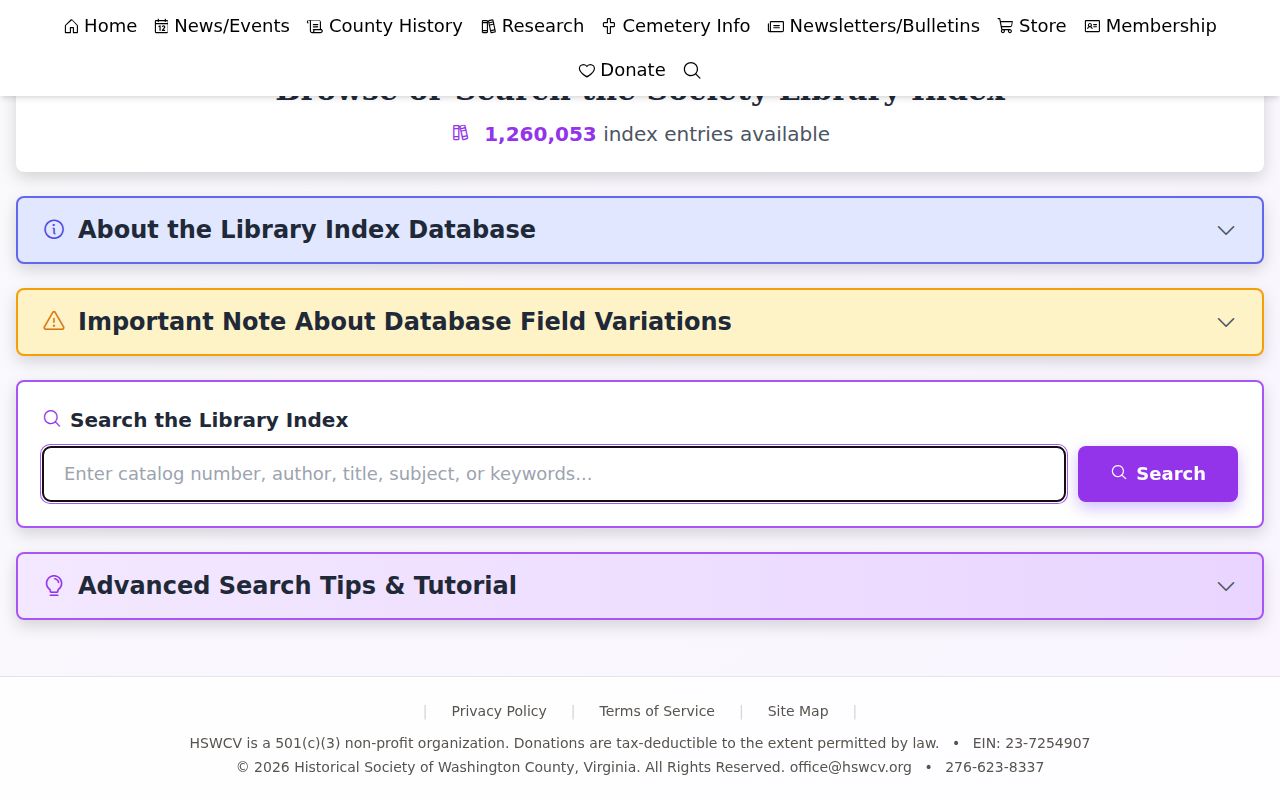
Note down the catalog number or title from any result so a researcher can pull the underlying source.
Estate Transfers in a Washington County Chain
A former owner rarely parted with a Washington County parcel by simple deed alone. The transfer may have run through a will, an executor or administrator deed, survivorship, a trust, or a partition. It may also have been a court-approved sale. Probate appointments sit with the Circuit Clerk. Commissioner of Accounts files can hold inventories, accountings, heir lists, and property descriptions. The signer of an estate deed may appear only by role. That signer may not be the name on the earlier tax card.
A will shows intent. The recorded instrument shows how the land actually passed. Check the probate docket first. Then check any executor or administrator deed, and compare the legal description against the next conveyance in the chain. For a current-owner approach, start with the present account. The Washington County current-owner record lays out that first step. Record the estate source beside the deed reference. That habit keeps a name change from looking like a missing transfer.
Separating Washington County Deeds and Liens
Not everything recorded in the chain transfers ownership. A deed conveys an interest in the land. A deed of trust only secures a loan. A satisfaction or release closes out that security. Liens and easements can burden a parcel without moving title at all. A tax-sale notice stays a notice until the final deed or order is recorded.
Copy the instrument type before you read the names. That single habit prevents most false leads when tracing former owners. The Washington County deed records page covers the different recorded instruments. It also explains how to order copies. Here the focus stays on the chain's time depth and the prior parties.